A Concise Popeyes History | the 1989 Church’s Deal | and What It Meant
Timeline: From a Single Shop to a Global Brand
Here is deep down in the Popeyes history, using a suitable timeline:
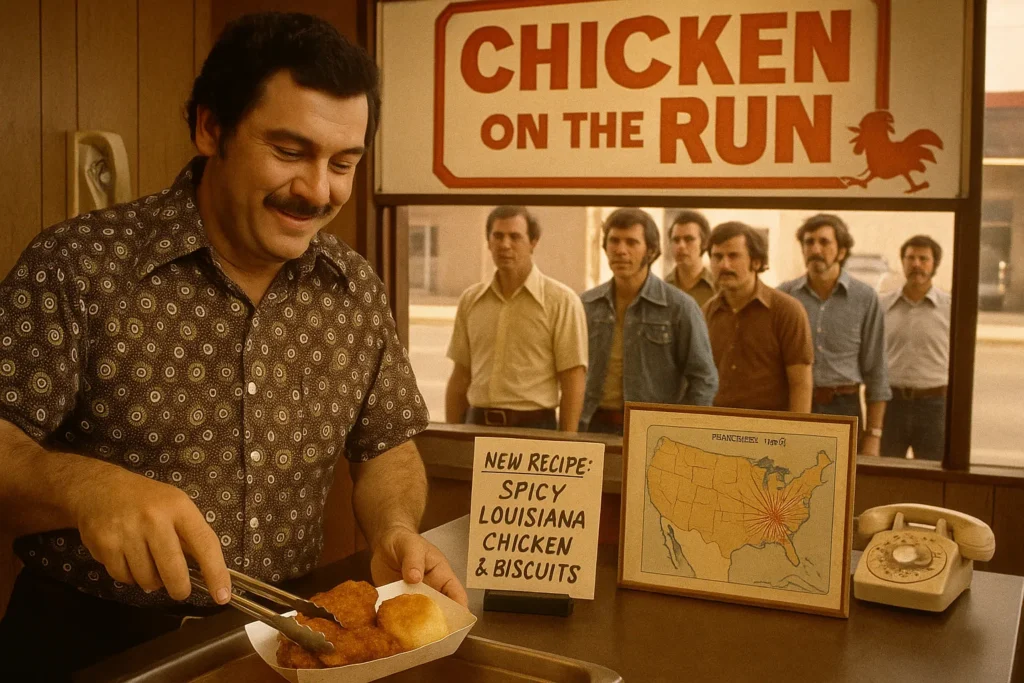
- 1972 – Founding (New Orleans area): Alvin “Al” Copeland opens a store in Arabi, Louisiana, where he sells fried chicken. He first called his restaurant “Chicken on the Run,” but after a few bumps in the road, he changed the name to Popeyes and quickly focused on spicy, Louisiana-style flavors and biscuits. Wikipedia
- 1976–1985 – Franchising boom: Popeyes starts franchising in 1976 and grows across the U.S. and into Canada by 1984, reaching hundreds of locations by the mid-1980s. Wikipedia
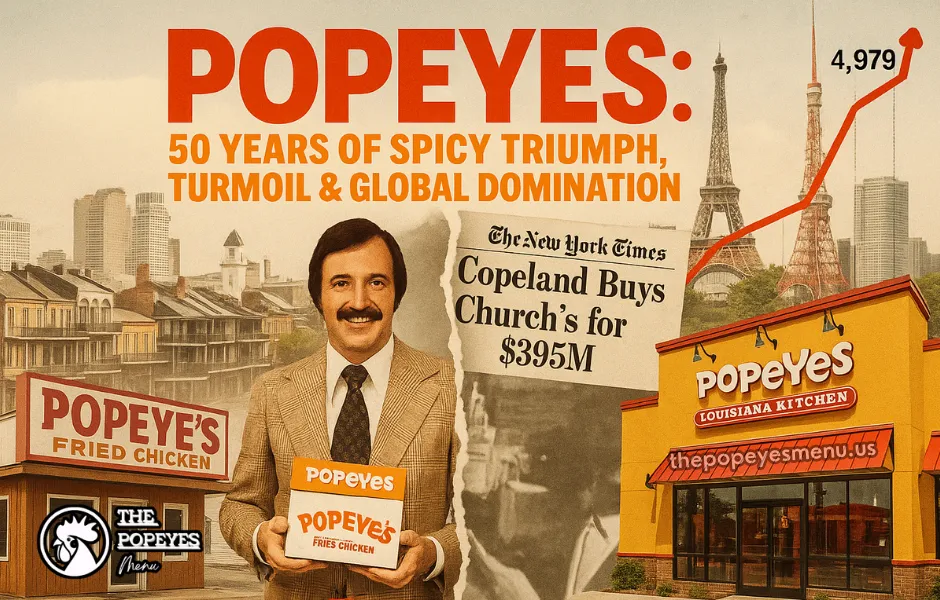
- 1989 – The Church’s acquisition: Copeland won a hard-fought takeover of Church’s Fried Chicken, agreeing to buy up to 86.5% of Church’s at $11 per share. At the time, the deal was worth about $395 million. The Washington Post | Upi
- Merger Fallout with Church’s Chicken (1989–1991)
In 1989, Al Copeland Enterprises bought Church’s Chicken for more than $330 million in a leveraged buyout. The deal made things very difficult because a lot of Popeyes and Church’s locations ended up competing with each other in the same markets. To fix the overlap, the company tried to close down restaurants that weren’t doing well, sell off franchises, and change the names of some Church’s restaurants to Popeyes. Even with these efforts, the company’s heavy debt from the merger made things very hard for them financially. By April 1991, the burden was too much, and Copeland’s business had to file for Chapter 11 bankruptcy protection. Tampa Bay Times | TheDailyMeal - 1991 – Debt pressure and bankruptcy: The highly leveraged buyout leaves Copeland’s group with almost $400 million in debts. In April 1991, creditors force the combined operation into Chapter 11. Tampa Bay Times
- 1992 – New parent company created: Creditors (especially CIBC) came up with a plan that was approved by the court. This plan makes America’s Favorite Chicken Company (AFC) the new parent of Popeyes and Church’s, and Copeland loses control of the brands.. Encyclopedia.com | FundingUniverse
- 2004 – Church’s sold: AFC sells Church’s to Arcapita but keeps Popeyes. (Background histories give a brief overview of the sequence.) FundingUniverse
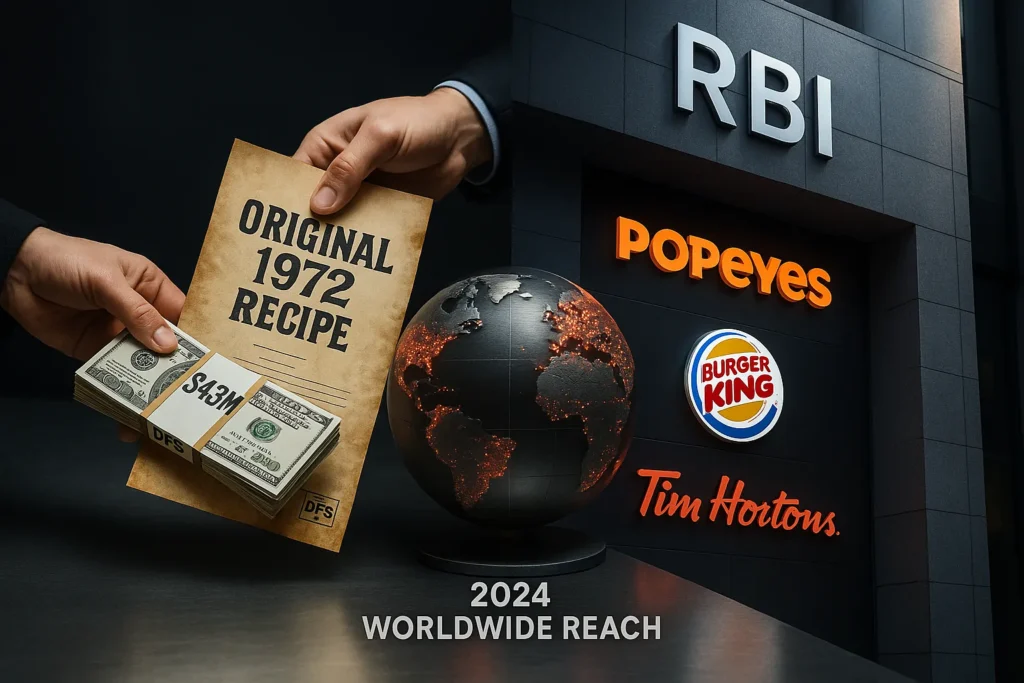
- 2014 – Recipes reunified: Popeyes pays $43 million to buy back its core recipes from Diversified Foods & Seasonings (DFS), the supply company Copeland kept after bankruptcy. This ends a long-running royalty/contract that was supposed to last until 2029 Bloomberg.com | TIME | Fox News
- 2017–present – Under RBI: Popeyes joins Restaurant Brands International (RBI) with Burger King, Tim Hortons, and Firehouse Subs. RBI says that by December 31, 2024, there will be 4,979 Popeyes restaurants around the world.. Q4 Capital
The 1989 Church’s Chicken Acquisition — What Happened and Why It Mattered
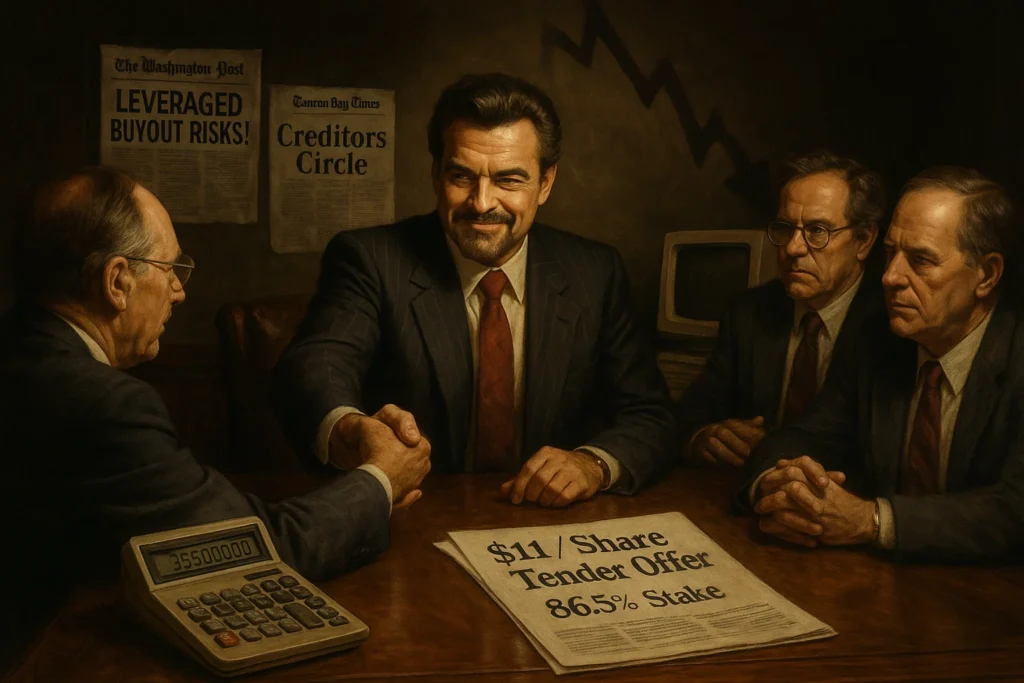
The offer and the price. Copeland outsmarted other bidders in early 1989 to buy Church’s through a tender offer that cost $11 per share and covered up to 30.1 million shares (about 86.5%). The total value, according to modern reports, was about $395 million. The Washington Post | Upi
Use and overlap. The buyer got a lot of help with the money. At the time, analysts and reporters said that the strain on the balance sheet and the fact that the two chicken chains had a lot of stores in the same area would make it hard to combine them. The merged company was in bankruptcy court two years later because it owed almost $400 million. Tampa Bay Times | Los Angeles Times
Result. This was the most important event in Popeyes history, in October 1992, the bankruptcy judge approved a plan from the creditors that made AFC the new owner of Popeyes and Church’s, taking over from Copeland’s group. Under AFC, the brands kept running separately until Church’s was sold off in 2004. Encyclopedia.com | FundingUniverse
Al Copeland Enterprises (ACE): Fast Facts
- Founder & showman: Al Copeland was a New Orleans businessman and restaurant owner who was known for his flashy marketing and even racing powerboats in the Caribbean. Al Copeland Foundation
- ACE & the buyout: ACE and its affiliates were in charge of the Church’s purchase. Copeland lost the brands after the bankruptcy, but Diversified Foods & Seasonings (DFS), which made batters, spice blends, sauces, and sides for Popeyes, kept the supply side. Los Angeles Times | Diversified
- The “recipes” story: DFS kept the rights to the recipes and the supply chain, so Popeyes paid $43 million in 2014 to get full control of its core recipes and end long-term royalties and obligations. Bloomberg.com | TIME | CBS News
By the Numbers: Locations and Scale Today
Where Popeyes stands now (RBI filings):
- System restaurant count: As of December 31, 2024, there were 4,979 Popeyes restaurants around the world (out of a total of 32,125 RBI restaurants).
- Popeyes segment restaurant count (Dec. 31, 2024): there were 3,520 Popeyes restaurants in the PLK segment table (this table shows U.S. and Canada segment reporting and is different from the global brand tally above).
The higher number comes from RBI’s 2024 annual report and includes all Popeyes restaurants around the world. The PLK segment table is based on RBI’s geographic segment definitions Q4 Capital+1
Strategic Pros and Cons of the 1989 Merger (with Hindsight)
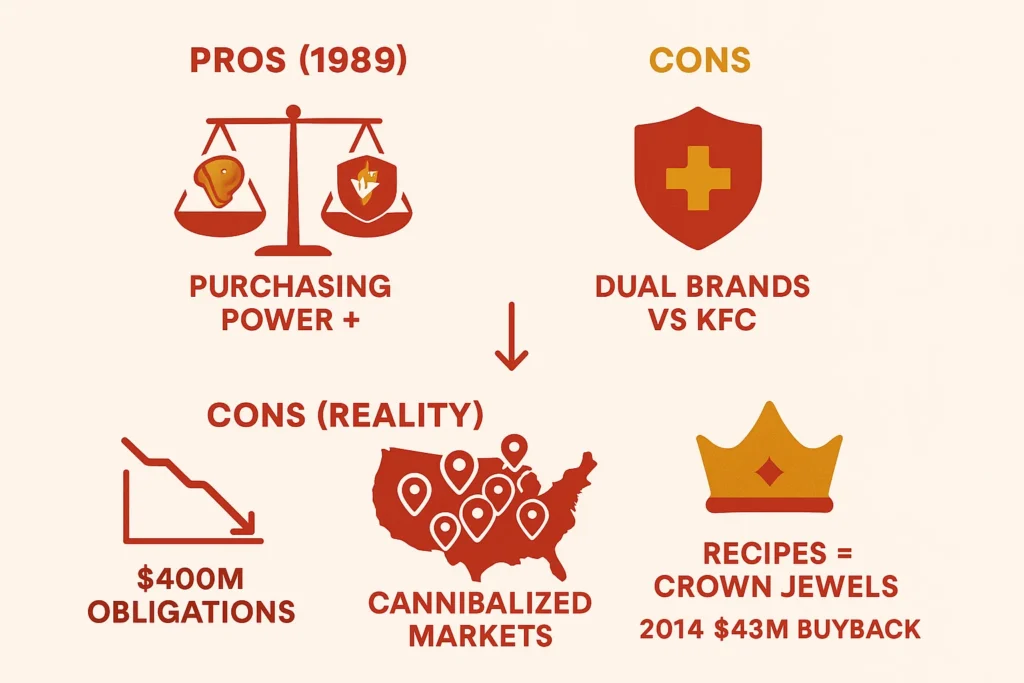
Potential Pros (theory at the time):
- Scale & purchasing power: The idea behind bringing together the second- and third-largest U.S. chicken companies under one roof was that it would make buying and selling chicken more efficient. (This is how LBOs usually work in QSR roll-ups.)
- Brand portfolio defense: Owning two chicken brands made it possible to target KFC and other regional competitors, which may have helped protect market share in different price and quality levels.
- Franchise system leverage: More units can make national advertising and distribution more cost-effective.
Read more about Popeyes Franchise Cost vs value.
Real-world Cons (what actually happened):
- High leverage risk realized: High leverage risk realized: The deal’s heavy debt load couldn’t be sustained because of integration costs and macro pressures, leading to bankruptcy by 1991. Tampa Bay Times
- Market overlap & cannibalization: A lot of franchisees had to deal with conflicts because they were in the same market, which made it hard to decide how to allocate capital between brands. Modern news stories and later court documents showed that there was tension over dual-brand territory strategies. Los Angeles Times | Justia
- Operational distraction: Managing two large, separate franchised systems was hard for management at a time when both brands needed to be improved.
- Loss of founder control: AFC took over the restaurant brands when Copeland went bankrupt, but he still owned DFS. Encyclopedia.com
The bottom line is that the takeover gave theoretical scale advantages but failed the balance sheet test. The synergy thesis was overwhelmed by leverage and brand overlap.
Quick Reference Table
| Topic | Key Facts | Sources |
| Founding | 1972, Al Copeland, New Orleans area; rapid franchising by mid-1980s | Wikipedia |
| Church’s Acquisition (1989) | Tender at $11/share up to 86.5%; total value ≈ $395M | The Washington Post | Upi |
| Leverage & Bankruptcy | Nearly $400M obligations; creditors forced Chapter 11 in Apr. 1991 | Tampa Bay Times |
| Post-bankruptcy Owner | AFC created in 1992 to own Popeyes + Church’s | Encyclopedia.com | FundingUniverse |
| Recipes Buyback | $43M to acquire recipes from DFS (2014) | Bloomberg.com | TIME |
| Locations Today | 4,979 Popeyes worldwide (RBI, Dec. 31, 2024) | Q4 Capital |
Why This Popeyes History Still Matters
- Ambition is less important than capital structure. The Church’s deal was interesting from a strategic point of view, but it was weak from a structural point of view. In franchised systems, where margins are small and capital cycles are long, over-leverage can make the benefits of scale go away. (The bankruptcy in 1991 is the warning sign.) Tampa Bay Times
- Strategic IP is managing the supply chain. Popeyes didn’t own its own recipes for decades because Copeland kept DFS. It didn’t get them back until 2014, when it paid to get them back. For restaurant brands, their own recipes and supply contracts are important parts of their business, not just things that happen in the back office. Bloomberg.com | TIME
- RBI’s growth around the world. Popeyes has grown to thousands of locations around the world, thanks to professionalized ownership and a stronger balance sheet. The company is still looking for new markets around the world. (RBI’s 2024 filing gives the exact size of the footprint.) Q4 Capital
Sources & Further Reading
- Washington Post (February 17, 1989), UPI (February 16, 1989, and April 5, 1991), and Tampa Bay Times (April 6, 1991) all talk about the deal and bankruptcy era. The Washington Post | Upi+1 | Tampa Bay Times
- AFC formation & post-reorg: Encyclopedia.com company profile; FundingUniverse corporate history. Encyclopedia.com | FundingUniverse
- Copeland/DFS & recipe IP: Bloomberg Businessweek; TIME; AP/CBS coverage. Bloomberg.com | TIME | CBS News
Check out the Complete Popeyes menu here.
Current scale: Restaurant Brands International 2024 Annual Report (system restaurant counts and PLK segment table). Q4 Capital+1