Monterey Chicken Spaghetti Recipe – Creamy, Cheesy & Perfect for Family Dinner
Introduction
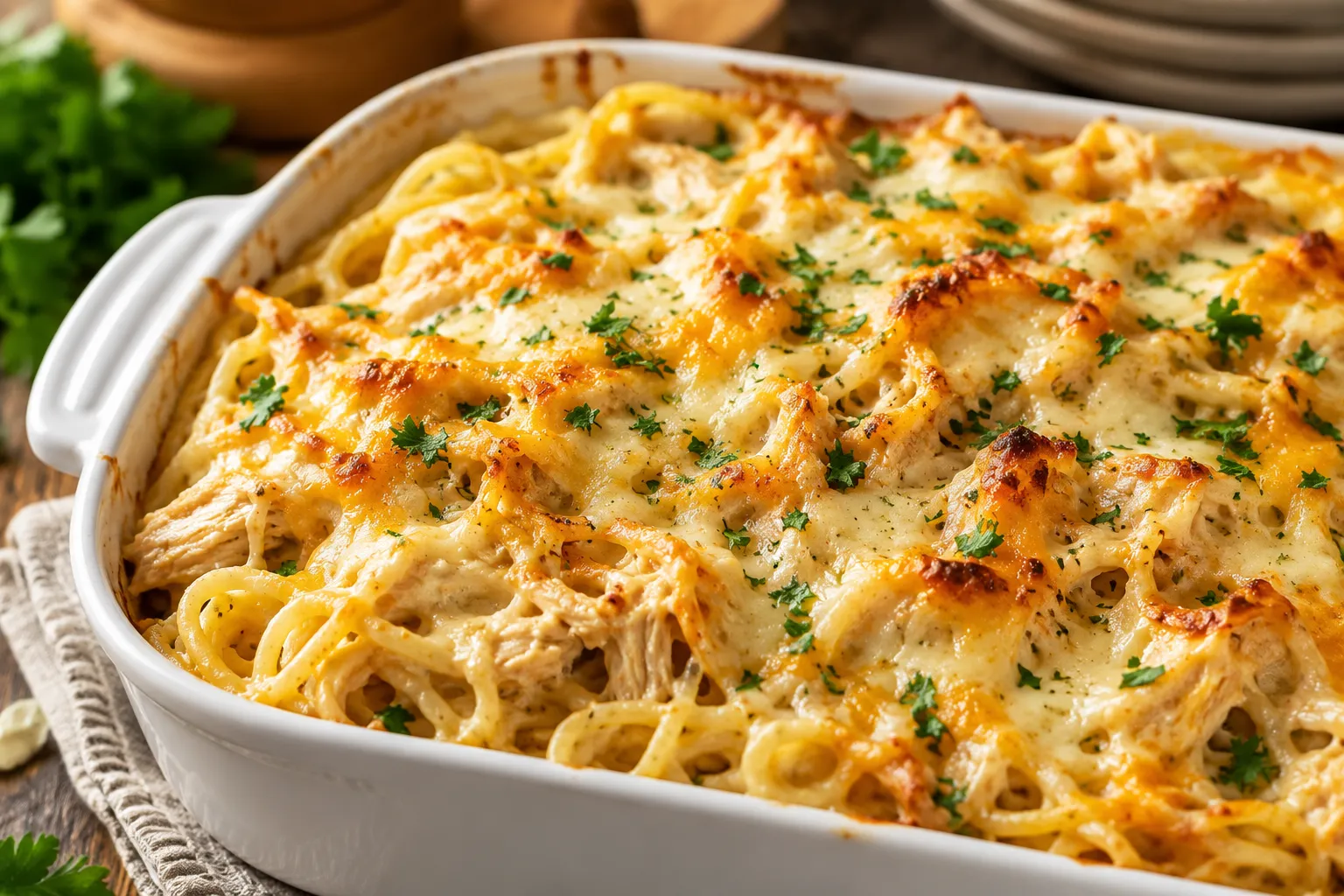
Monterey Chicken Spaghetti Recipe is the kind of cozy baked pasta dish that feels rich, comforting, and satisfying without being difficult to make. It combines tender spaghetti, juicy chicken, creamy sauce, melted Monterey Jack cheese, and savory seasonings into one bubbling casserole-style dinner.
This recipe is perfect for busy weeknights, potlucks, Sunday family meals, or anytime you want a hearty pasta bake that tastes homemade and comforting. The flavor is creamy, cheesy, lightly savory, and mild enough for kids, but easy to customize with spice, vegetables, or extra toppings.
What makes Monterey chicken spaghetti special is the balance of textures. The spaghetti stays tender, the chicken adds protein and substance, the creamy sauce coats every bite, and the cheese melts into a golden, gooey topping. It is simple, budget-friendly, and made with ingredients you can find in most grocery stores.
Why You’ll Love This Recipe
- Creamy and cheesy: Monterey Jack cheese melts beautifully and gives the pasta a smooth, rich texture.
- Family-friendly flavor: The seasoning is savory and comforting without being too spicy.
- Great for leftovers: This dish reheats well and makes an easy next-day lunch.
- Perfect for cooked chicken: Use rotisserie chicken, leftover baked chicken, grilled chicken, or boiled shredded chicken.
- Easy to customize: Add vegetables, spice, bacon, ranch seasoning, or extra cheese.
- Potluck-friendly: It travels well and can be baked in a large casserole dish.
- Beginner-friendly: The steps are simple, and the recipe does not require advanced cooking skills.
- Comfort food classic: It has the creamy, baked pasta texture people love in a satisfying chicken spaghetti casserole.
Ingredients You’ll Need
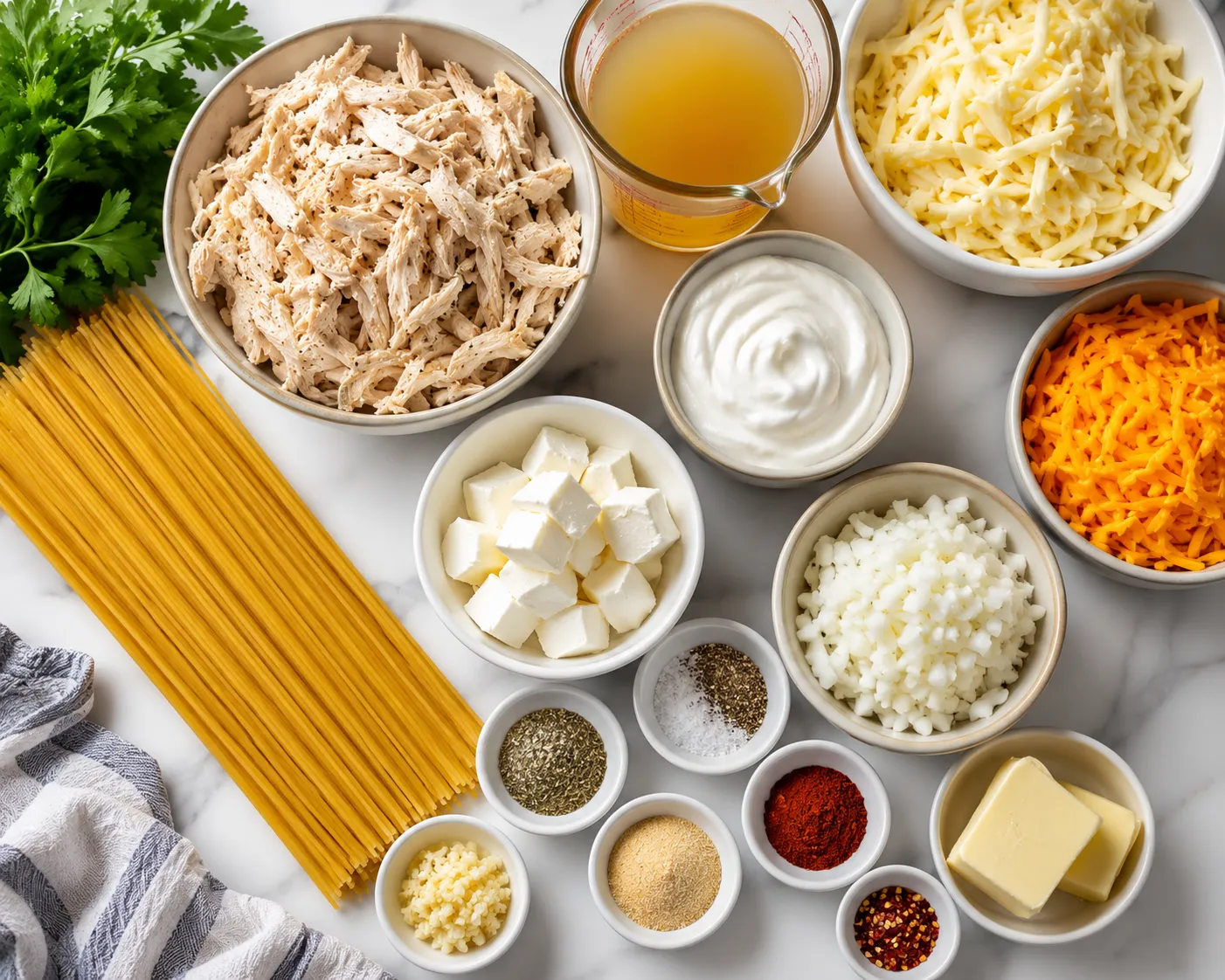
For the Main Recipe
- 12 ounces spaghetti
- 3 cups cooked shredded chicken
- 2 tablespoons unsalted butter
- 1 small yellow onion, finely diced
- 3 cloves garlic, minced
- 1 cup chicken broth
- 1 cup sour cream
- 1 cup cream of chicken soup
- 4 ounces cream cheese, softened and cubed
- 1 ½ cups shredded Monterey Jack cheese, divided
- 1 cup shredded cheddar cheese
- 1 teaspoon Italian seasoning
- ½ teaspoon smoked paprika
- ½ teaspoon onion powder
- ½ teaspoon garlic powder
- ½ teaspoon black pepper
- ½ teaspoon salt, or to taste
- ¼ teaspoon crushed red pepper flakes, optional
- ½ cup milk, as needed for loosening the sauce
For the Topping
- ½ cup shredded Monterey Jack cheese
- ½ cup shredded cheddar cheese
- ¼ cup grated Parmesan cheese
- ½ cup crushed buttery crackers or panko breadcrumbs
- 1 tablespoon melted butter
Optional Garnishes
- Fresh parsley
- Sliced green onions
- Crispy bacon bits
- Extra Parmesan
- Cracked black pepper
Ingredient Notes
Spaghetti: Traditional spaghetti works best because it holds the creamy sauce well without becoming too heavy. You can also use linguine, fettuccine, penne, or rotini. Avoid overcooking the pasta because it will continue softening in the oven.
Chicken: Cooked shredded chicken keeps this recipe quick and convenient. Rotisserie chicken is a great shortcut because it adds flavor and moisture. If using plain boiled chicken, season the sauce well so the dish does not taste flat.
Monterey Jack cheese: This is the key ingredient. Monterey Jack melts smoothly and gives the casserole its creamy, mild, slightly buttery flavor. For a spicier version, use Pepper Jack cheese.
Cheddar cheese: Cheddar adds a sharper flavor and helps balance the mild Monterey Jack. Medium cheddar is a good choice because it melts well and has enough flavor without becoming oily.
Cream cheese: Softened cream cheese helps create a thicker, richer sauce. Cut it into small cubes so it melts faster and blends smoothly.
Sour cream: Sour cream adds tanginess and keeps the sauce creamy. Greek yogurt can be used as a substitute, but it should be stirred in gently over low heat to avoid curdling.
Cream of chicken soup: This gives the sauce body and classic casserole flavor. You can use a homemade cream sauce if you prefer a less processed option.
Chicken broth: Broth helps thin the sauce while adding savory flavor. Use low-sodium broth if you want more control over salt.
Cracker or breadcrumb topping: This adds a light crunch that contrasts beautifully with the creamy pasta. Mix it with melted butter so it turns golden in the oven.
Kitchen Tools You’ll Need
- Large pot for boiling pasta
- Large skillet or saucepan
- 9×13-inch baking dish
- Cutting board
- Sharp knife
- Measuring cups and spoons
- Wooden spoon or spatula
- Colander
- Mixing bowl
- Cheese grater, if shredding cheese by hand
- Aluminum foil, optional
- Oven mitts
Step-by-Step Instructions
Step 1: Preheat the Oven
Preheat your oven to 350°F / 175°C.
Lightly grease a 9×13-inch baking dish with butter or cooking spray. This helps prevent the creamy spaghetti from sticking to the bottom and makes serving easier.
Step 2: Cook the Spaghetti
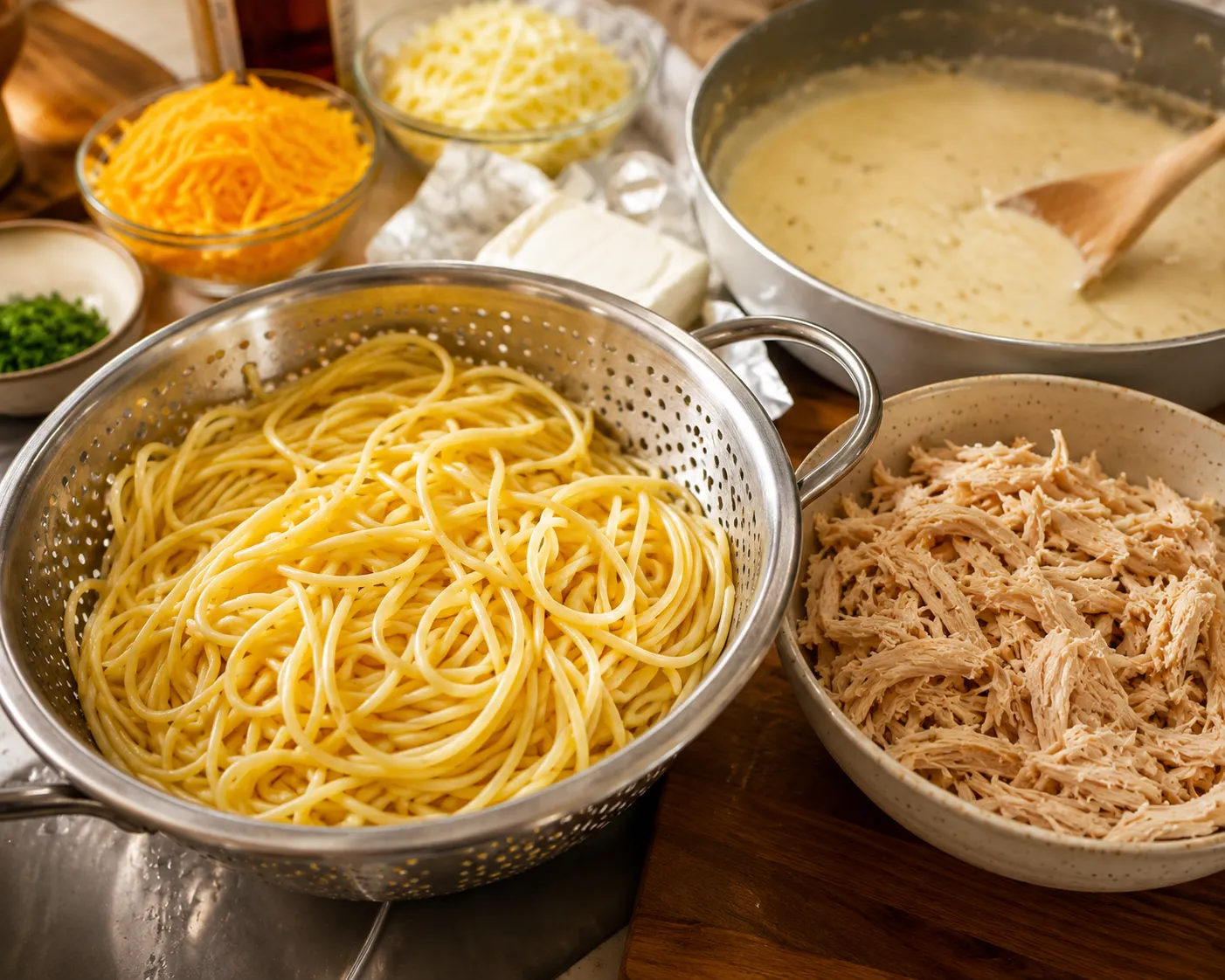
Bring a large pot of salted water to a boil. Add the spaghetti and cook it for 1 to 2 minutes less than the package directions.
The pasta should be slightly firm in the center. This is important because it will bake again in the oven. If the spaghetti is fully cooked before baking, it may become too soft after absorbing the sauce.
Drain the pasta and set it aside. Do not rinse it unless it becomes very sticky. A little starch on the noodles helps the sauce cling better.
Step 3: Sauté the Onion and Garlic
In a large skillet or saucepan, melt 2 tablespoons butter over medium heat.
Add the diced onion and cook for 3 to 4 minutes, stirring often, until it becomes soft and translucent. Add the minced garlic and cook for another 30 seconds.
The garlic should smell fragrant but not brown. Burnt garlic can make the sauce taste bitter, so keep the heat moderate.
Step 4: Make the Creamy Sauce
Reduce the heat to low.
Add the chicken broth, cream of chicken soup, sour cream, and cubed cream cheese. Stir slowly until the cream cheese melts and the sauce becomes smooth.
Add Italian seasoning, smoked paprika, onion powder, garlic powder, black pepper, salt, and crushed red pepper flakes if using.
The sauce should look creamy, glossy, and thick enough to coat the back of a spoon. If it feels too thick, stir in milk a few tablespoons at a time until it reaches a pourable consistency.
Step 5: Add Chicken and Cheese
Stir in the shredded chicken, 1 cup Monterey Jack cheese, and 1 cup cheddar cheese.
Mix until the cheese melts into the sauce and the chicken is evenly coated. Taste the sauce before adding the pasta. If it tastes slightly bold at this stage, that is good because the pasta will absorb some of the seasoning.
Step 6: Combine the Pasta and Sauce
Add the cooked spaghetti to the sauce.
Use tongs or a large spoon to gently toss everything together until the noodles are fully coated. Make sure the chicken is evenly distributed throughout the pasta.
If the mixture seems dry, add a splash of milk or chicken broth. Baked pasta needs a little extra moisture because the noodles continue absorbing sauce in the oven.
Step 7: Assemble the Casserole
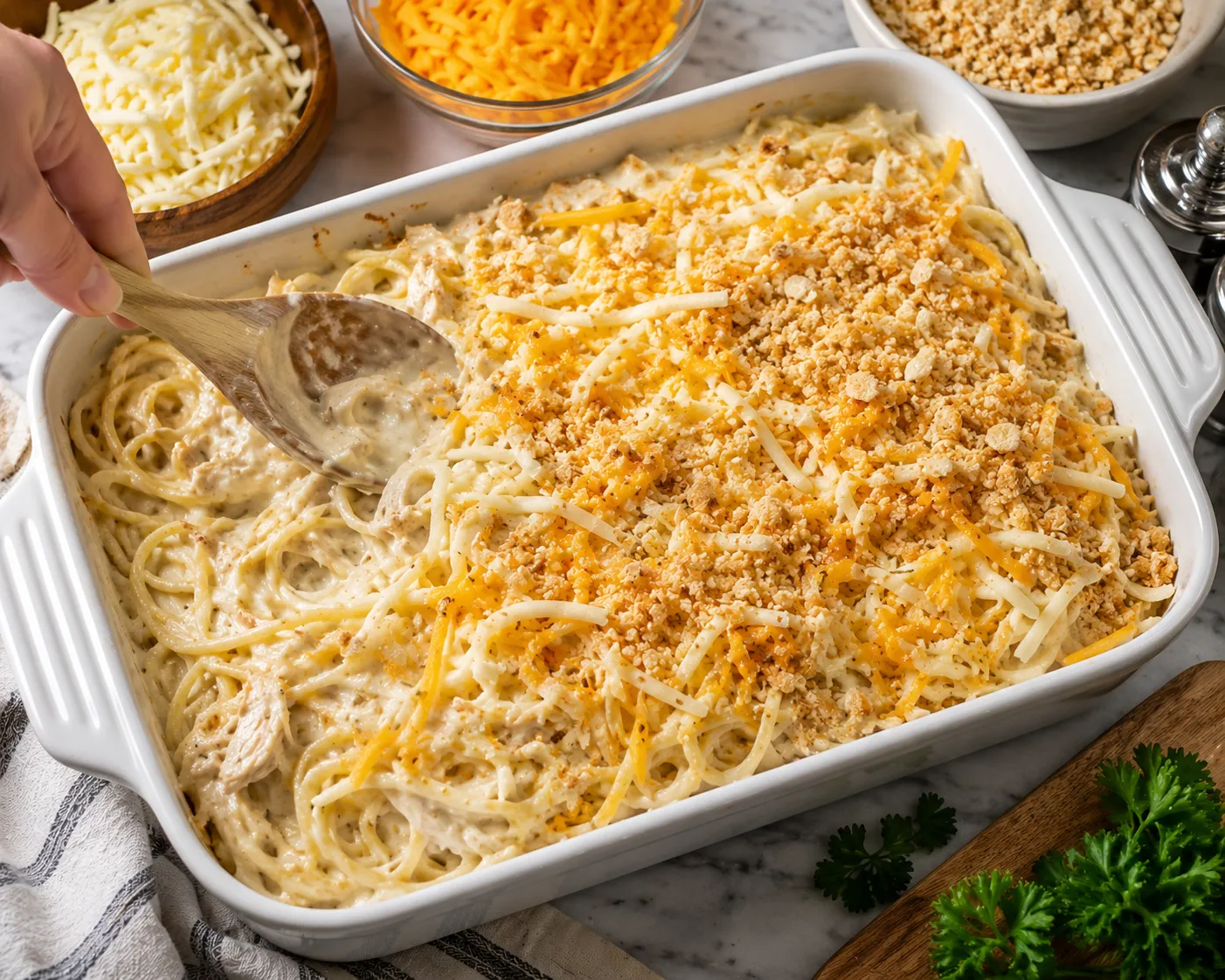
Transfer the Monterey chicken spaghetti mixture to the prepared baking dish.
Spread it evenly into the dish without pressing it down too firmly. A loose, even layer helps the sauce stay creamy and allows the cheese topping to melt properly.
Sprinkle the remaining Monterey Jack cheese, cheddar cheese, and Parmesan over the top.
In a small bowl, mix crushed crackers or panko breadcrumbs with melted butter. Sprinkle this mixture over the cheese layer.
Step 8: Bake Until Bubbly
Bake uncovered at 350°F / 175°C for 25 to 30 minutes.
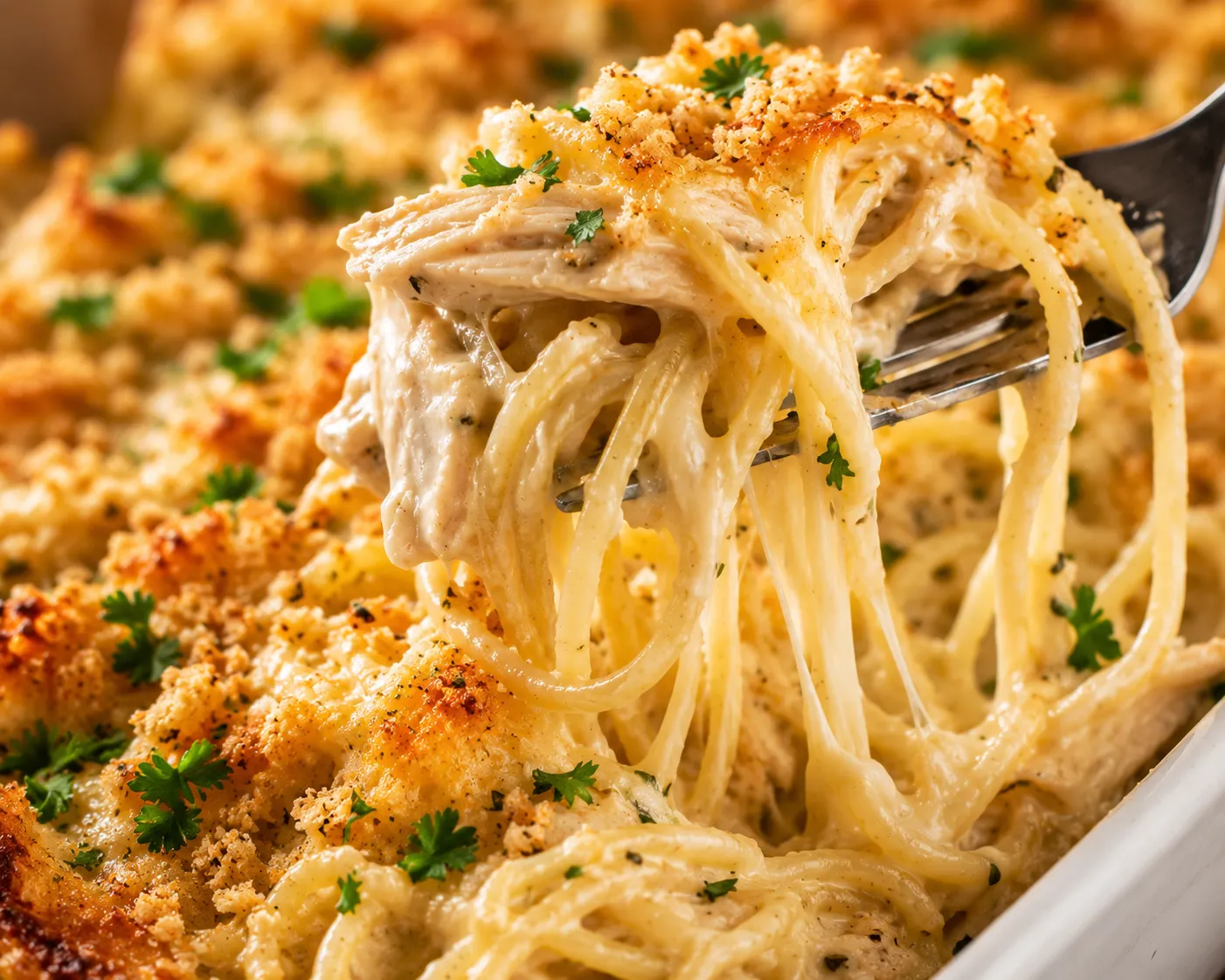
The casserole is ready when the edges are bubbling, the cheese is fully melted, and the topping is lightly golden.
If you want a deeper golden top, broil for 1 to 2 minutes at the end, but watch carefully because breadcrumbs can burn quickly.
Step 9: Rest Before Serving
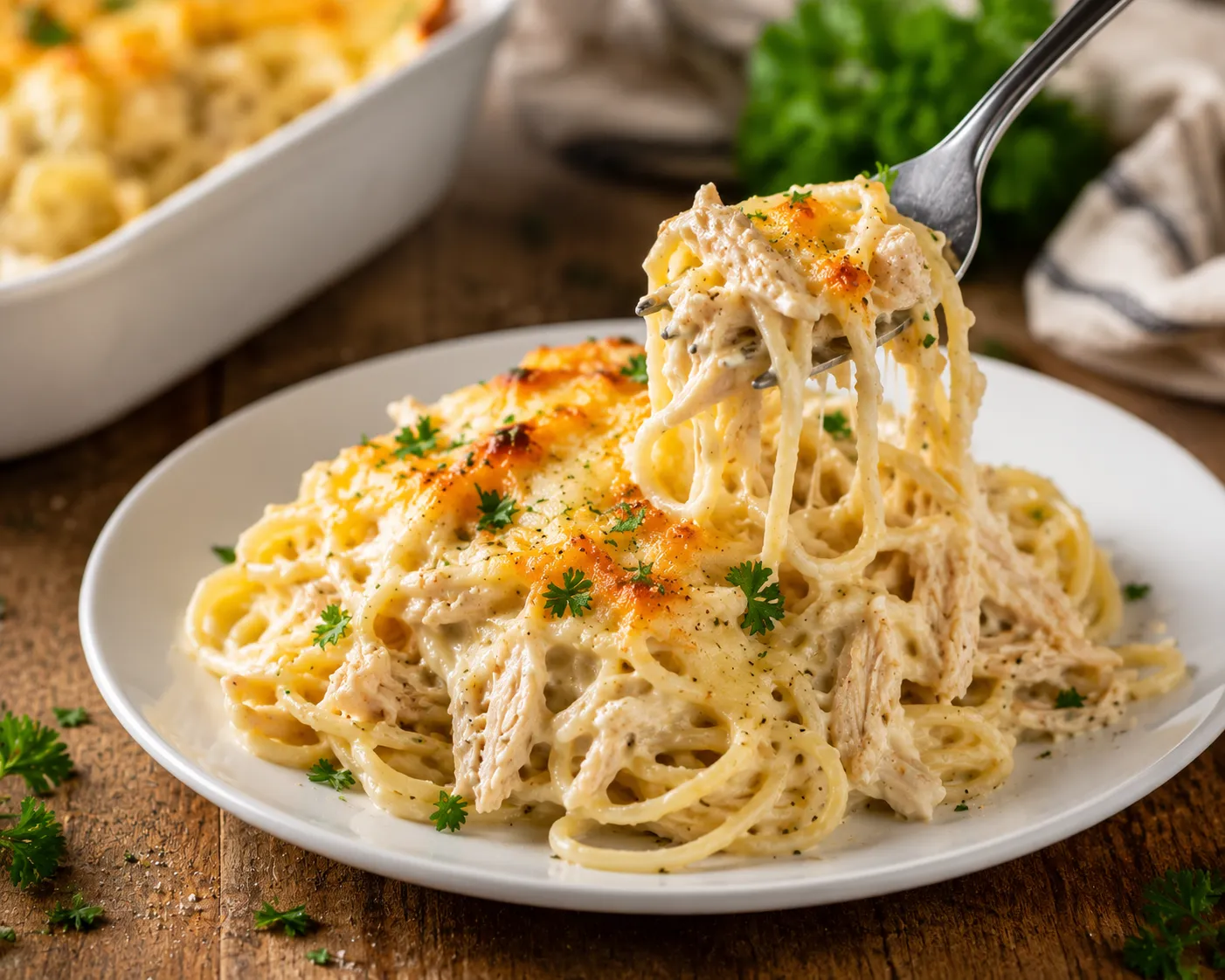
Remove the casserole from the oven and let it rest for 5 to 10 minutes before serving.
This resting time helps the sauce settle and makes the pasta easier to slice and serve. Garnish with fresh parsley, green onions, or black pepper.
Expert Tips for Best Results
Use freshly shredded cheese if possible. Pre-shredded cheese often contains anti-caking agents that can make sauces less smooth.
Cook the spaghetti slightly underdone. This prevents mushy pasta after baking.
Soften the cream cheese before adding it to the sauce. Cold cream cheese can leave small lumps.
Taste the sauce before baking. Pasta absorbs salt and seasoning, so the sauce should be flavorful before it goes into the oven.
Do not overbake the casserole. Once the cheese is melted and the edges are bubbly, it is ready. Overbaking can dry out the sauce.
Use rotisserie chicken for extra flavor and convenience. It saves time and adds a savory depth to the recipe.
Let the casserole rest before serving. This keeps the sauce creamy instead of runny.
Add milk or broth if the pasta mixture looks too thick before baking. Creamy baked pasta should go into the oven slightly saucier than you want the final result to be.
Common Mistakes to Avoid
Overcooking the Pasta
Spaghetti continues cooking in the oven. Boil it just until slightly firm so it does not turn mushy after baking.
Using Too Little Sauce
Pasta absorbs moisture as it bakes. If the mixture looks dry before going into the oven, add a splash of milk or chicken broth.
Adding Cream Cheese While It Is Cold
Cold cream cheese takes longer to melt and may create small lumps. Let it soften first or cut it into small cubes.
Baking Too Long
Overbaking can dry out the casserole. Bake only until the cheese is melted, the edges bubble, and the topping turns lightly golden.
Forgetting to Season the Chicken
If your cooked chicken is plain, the sauce needs enough seasoning to carry the whole dish. Taste and adjust before baking.
Using High Heat for the Sauce
Creamy sauces can separate when cooked too aggressively. Keep the heat low once the dairy ingredients are added.
Recipe Variations
Spicy Monterey Chicken Spaghetti
Use Pepper Jack cheese instead of Monterey Jack. Add diced jalapeños, crushed red pepper flakes, or a dash of hot sauce to the sauce.
Bacon Monterey Chicken Spaghetti
Stir cooked crumbled bacon into the pasta mixture and sprinkle more on top before serving. Bacon adds smoky flavor and a crisp texture.
Ranch Monterey Chicken Spaghetti
Add 1 to 2 tablespoons of dry ranch seasoning to the sauce. This gives the casserole a tangy, herby flavor that pairs well with chicken and cheese.
Vegetable Monterey Chicken Spaghetti
Add steamed broccoli, spinach, mushrooms, bell peppers, peas, or corn. Make sure vegetables are cooked and drained so they do not water down the sauce.
Lighter Monterey Chicken Spaghetti
Use light sour cream, reduced-fat cream cheese, and part-skim cheese. You can also add extra vegetables and use whole wheat spaghetti.
Extra Creamy Version
Add an extra ¼ cup sour cream or ½ cup milk to the sauce before baking. This is helpful if you prefer a saucier pasta bake.
Kid-Friendly Version
Skip the red pepper flakes and smoked paprika. Use mild cheddar and Monterey Jack for a smooth, gentle flavor.
Party-Style Version
Bake the recipe in two smaller dishes instead of one large casserole. Serve one immediately and keep the other warm for guests.
What to Serve With This Recipe
Monterey chicken spaghetti is rich and creamy, so it pairs best with fresh, crisp, or lightly seasoned sides.
Good serving ideas include:
- Garlic bread
- Caesar salad
- Garden salad with vinaigrette
- Roasted broccoli
- Steamed green beans
- Roasted asparagus
- Cucumber tomato salad
- Dinner rolls
- Sautéed zucchini
- Corn on the cob
- Pickled jalapeños for a spicy contrast
For drinks, serve it with iced tea, lemonade, sparkling water, or a light citrus mocktail. A fresh drink balances the creamy cheese sauce nicely.
How to Store and Reheat
How to Store Leftovers
Let the casserole cool to room temperature, then transfer leftovers to an airtight container. Store in the refrigerator for 3 to 4 days.
Avoid leaving the dish at room temperature for more than 2 hours.
Can You Freeze Monterey Chicken Spaghetti?
Yes, Monterey chicken spaghetti can be frozen, although creamy pasta dishes may become slightly softer after thawing.
To freeze, place cooled portions in freezer-safe containers. Freeze for up to 2 months. For best texture, thaw overnight in the refrigerator before reheating.
Best Reheating Method
For the best texture, reheat covered in the oven at 325°F / 165°C until warmed through. Add a splash of milk or chicken broth before reheating to loosen the sauce.
For quick reheating, microwave individual portions in 45-second intervals, stirring between each interval. Add a small splash of milk if the pasta seems dry.
How to Keep the Texture Fresh
Creamy pasta thickens as it chills. Adding a little liquid before reheating helps bring back the creamy texture without making it watery.
Make-Ahead Instructions
Monterey chicken spaghetti is a great make-ahead dinner.
You can cook the chicken, boil the pasta, shred the cheese, and prepare the sauce ahead of time. Store each component separately in the refrigerator for up to 24 hours.
To assemble ahead, prepare the full casserole without baking it. Cover tightly and refrigerate for up to 24 hours.
When ready to bake, remove it from the refrigerator while the oven preheats. Bake at 350°F / 175°C for 30 to 35 minutes, or until hot and bubbly. If the top browns too quickly, cover loosely with foil.
For best results, add the breadcrumb topping right before baking so it stays crisp.
Nutrition Information
The following nutrition values are approximate and can vary depending on ingredient brands, portion sizes, and substitutions.
Estimated Nutrition Per Serving
- Calories: 520
- Protein: 31g
- Carbohydrates: 42g
- Fat: 25g
- Saturated Fat: 13g
- Fiber: 2g
- Sugar: 4g
- Sodium: 780mg
- Cholesterol: 95mg
This recipe is rich and comforting, so it works well as a satisfying main dish. To balance the meal, serve it with a green salad or steamed vegetables.
Frequently Asked Questions
Final Thoughts
Monterey Chicken Spaghetti Recipe is a creamy, cheesy, comforting dinner that is easy enough for weeknights and satisfying enough for family gatherings. With tender chicken, smooth Monterey Jack cheese, flavorful sauce, and a golden topping, every bite feels warm and hearty.
The best part is how flexible it is. Keep it mild for kids, add spice for extra flavor, mix in vegetables, or use rotisserie chicken for a shortcut. Once you learn the basic method, this recipe can easily become a regular comfort food favorite in your kitchen.